
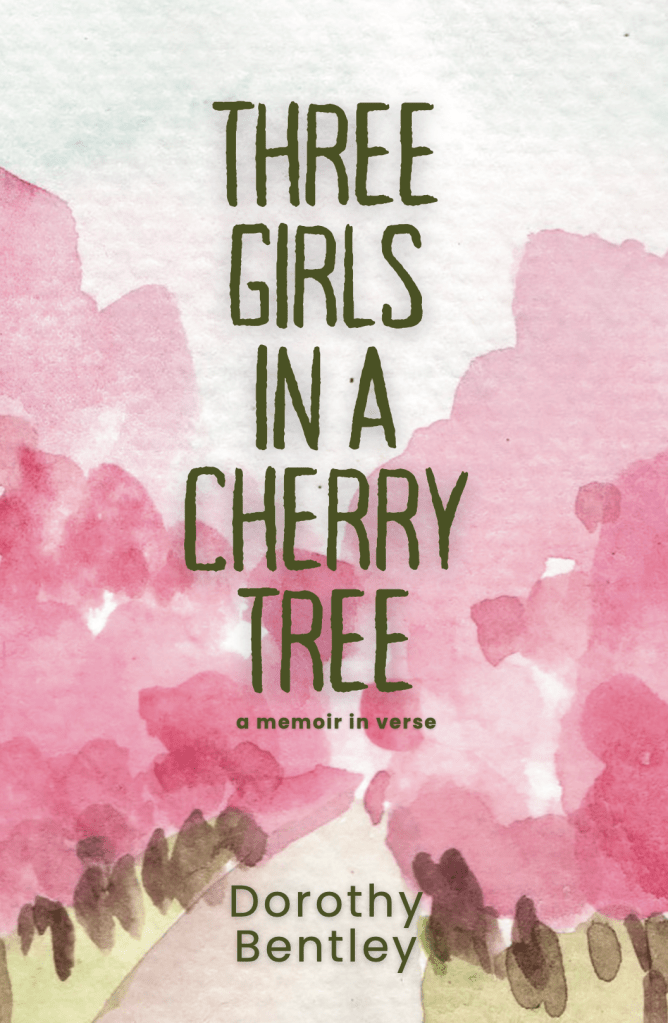
This memoir in verse is now available, (E!P, 2025), and it will be translated and published as a bilingual edition by the Budapest Academy Press in 2026.
What is a memoir?
A memoir isn’t the same as an autobiography or a biography. It’s a very personal account of one’s life, but only about a narrowly defined subject. In my memoir in verse, I include poems about my heritage research and other areas which tightly relate to that topic: reflections on family, culture, language lost and found, my parents’ history involved in revolution against communism, childhood, unique customs, and a dash of silliness, which every life must have, and every memoir should include. While there is a narrative arc, it isn’t the same as a novel, yet it resolves the quest which is presented at the outset of the work– the search for living relatives.
Review
“Underlying these delicate, seemingly simple poems – many celebrating the innocence and joy of childhood – lies the gut-wrenching decision Dorothy Bentley’s parents made to flee to Canada during the Hungarian Revolution in 1957. Like so many European refugees, they turned away from country and culture, forever leaving behind a family and, ultimately, a language. This beautiful collection is a journey back to that language. Bentley describes her yearning for the family she never knew and a growing desire to learn and write in her native language. “How was I to know that inside of me was slumbering the passion to consume ink and spill it back onto paper in my mother tongue” (Bonfires). Finally, she learns to say I love you: “Szeretlek.”
Katherine Matiko, poet and debut novelist of Eden’s Daughter.
Review
Dorothy Bentley’s newest poetry collection, Three Girls in a Cherry Tree, is a poignant tribute to origins and language which reveals her reflections and unique perspective. As an adult, Dorothy sought to understand the decisions that brought her family to Canada; a search led her to follow her roots and dedicate herself to embracing her predecessors and culture.
From Bonfires: inside of me / was slumbering / the passion to consume ink / and spill it back / onto paper / in my mother tongue
Her poetry is enriched with sensorial references to flavours and foods. From Lineage:
tangy as / horseradish / sweet as strudel / custard running / between fingers /(…) / sadness / and pride
She evokes a way of life that has near disappeared: From Zoli: born to ride free on the Magyar plains / bareback on a horse
Bentley expresses the nostalgia of connection to family members never met. From Mail from Maternal Grandmother: Transparent blue paper / unfolded, from an Air Mail envelope / (…)
Only after she was laid to rest, did I see / her in a photo (…) a great-grandson at her knee /
I’ll write her a transparent blue letter /and cast it upon the sea
And describes the experiences of new arrivals in this harsh land: From English Language Arts Classes: wearing old woolen coats / European sheep shorn / naked sheep / shivering on / Canadian soil
I was moved by the power of the pieces that retell the discovery of relatives hitherto unknown; in Second DNA Test: we are rooted together / branches / of the same tree
Such compassion and understanding in her elegy to the city of Budapest: To betray shatters windows
And lastly but most strikingly, the joy of learning to speak the tongue of her mother and father, with whom she shared a complicated relationship. In I Have Become Like a Child: Soon / I will write poetry / to describe the fall / of humidity on skin / (…) / the savoury paprika / on tongue
There is an authenticity, a sweetness in loss and discovery. Join Bentley on this poetic journey of unfolding and connection.
Josephine LoRe, poet. Her latest collection is called, The Moon And All Her Faces (2025). It was at times difficult to write the poems as I grappled with all the emotions from past decades and the unearthed history of my parents– a history they didn’t talk about. And at other times, particularly while writing the poems about childhood, I reflected on how other poets I’d studied in university approached their experiences by varying diction, enjambment, and playing with meter, alliteration and consonance. There are too many poets to mention, but any English Literature anthology, particularly from the romantic and modern eras, would likewise inspire others. I love how many of the poems have taken on a life of their own and not only remind me of a point in times’ past, but also remind me of when I wrote the poem and the poem or poet who inspired the work.
The two best ways to find inspiration to write, in my opinion, is through reading others’ work and by living life– a full joyous life. I hope others will enjoy the journey I took to discover my heritage. Order your copy of the memoir in verse HERE.
Happy reading and writing. D.
~
Dorothy Bentley, Box 75, Station Main, Okotoks, Alberta, Canada. T1S 1B6
